 Business License

How to Select a Mist Eliminator for Scrubber Towers: Engineering Selection Guide
How to Select a Mist Eliminator for Scrubber Towers: Engineering Selection Guide
Introduction
Scrubber towers are widely used for removing harmful gases, chemical vapors and pollutants from industrial exhaust streams.
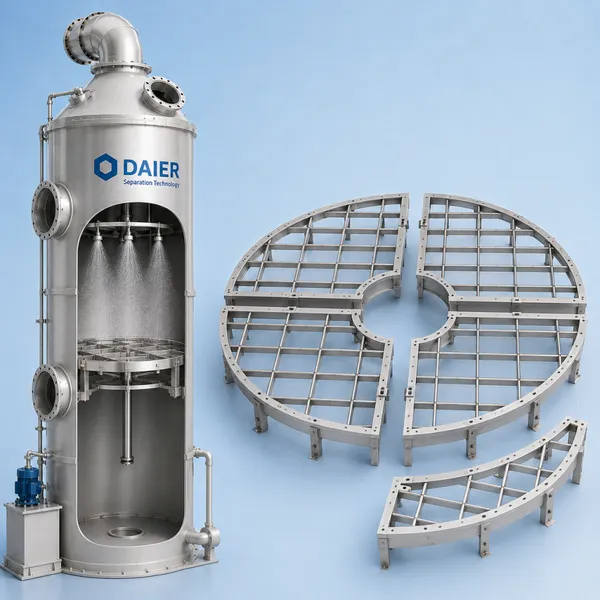
A mist eliminator installed at the outlet of a scrubber plays an important role in removing entrained liquid droplets and preventing liquid carryover.
Selecting the correct mist eliminator requires considering droplet size, gas velocity, corrosion conditions, fouling tendency and removal efficiency requirements.
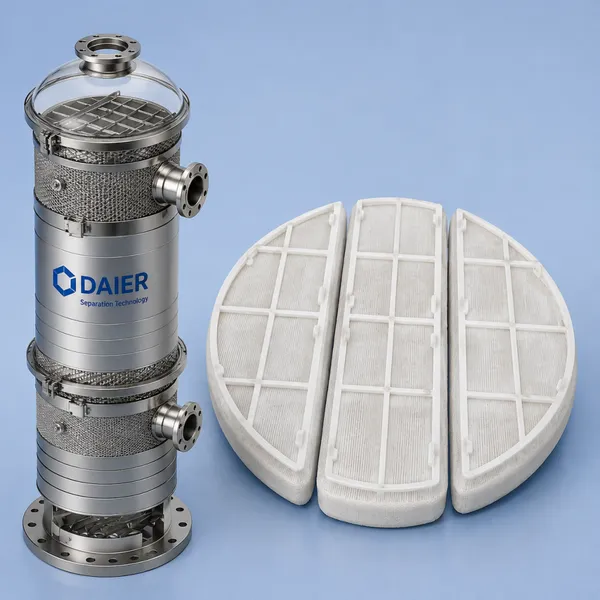
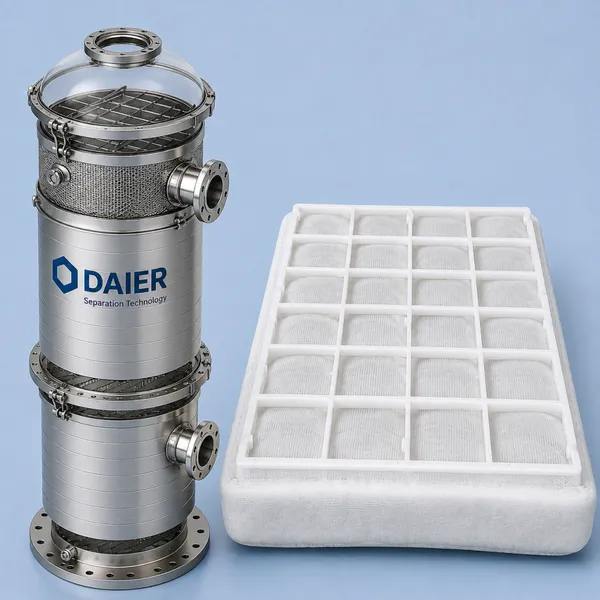
DAIER Separation provides wire mesh mist eliminators, vane mist eliminators and customized gas-liquid separation solutions for scrubber systems.
Why Does a Scrubber Need a Mist Eliminator?
During scrubber operation:
Gas contacts circulating liquid inside the tower
Liquid droplets are carried upward with gas flow
Mist eliminator removes these droplets before gas leaves the tower
Without proper mist removal, problems may occur:
Liquid carryover
Downstream equipment contamination
Corrosion problems
Reduced emission performance
Common Types of Mist Eliminators for Scrubbers
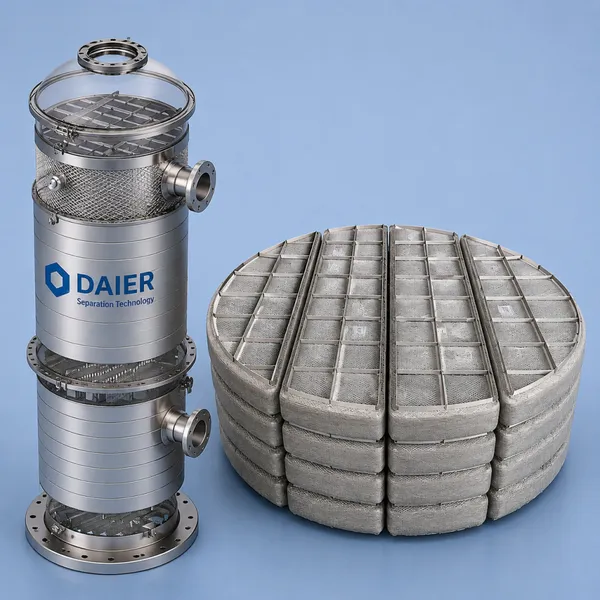
1. Wire Mesh Mist Eliminator
Wire mesh mist eliminators use knitted mesh layers to capture liquid droplets.
Advantages
High removal efficiency
Good performance for fine droplets
Compact structure
Low installation space requirement
Suitable Applications
Chemical scrubbers
Acid absorption towers
Clean gas streams
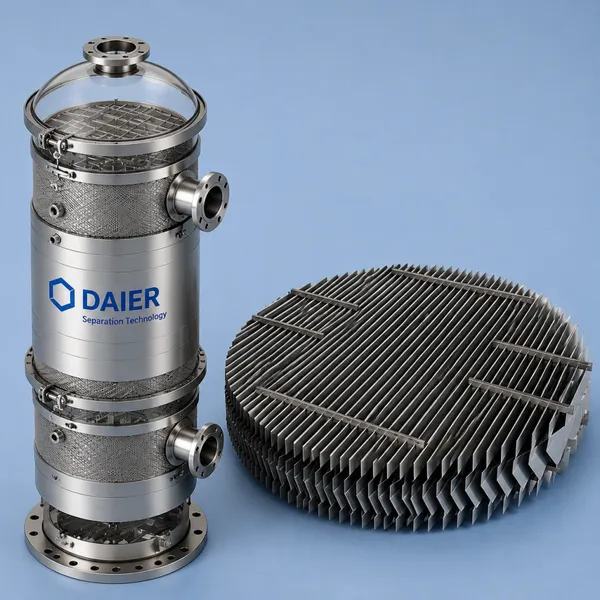
2. Vane Mist Eliminator
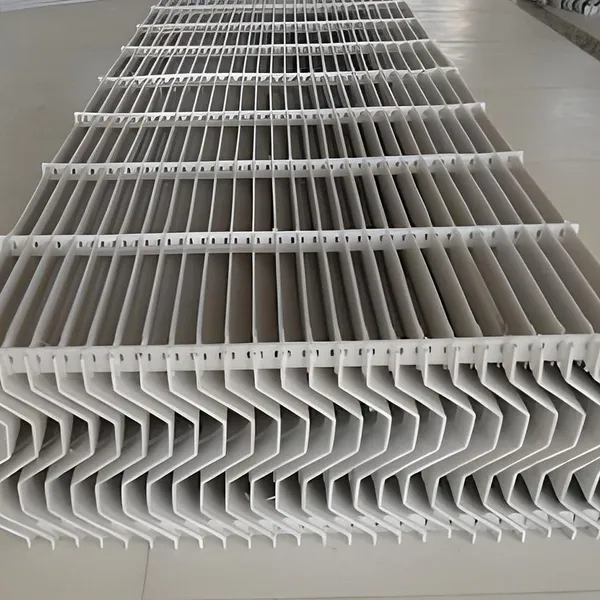
Vane mist eliminators use blade-type structures to separate droplets through changes in gas flow direction.
Advantages
Excellent fouling resistance
High gas handling capacity
Suitable for contaminated gas streams
Suitable Applications
Flue gas scrubbers
Large industrial scrubbers
High liquid loading systems
Key Factors for Mist Eliminator Selection
1. Droplet Size
Droplet size determines separation performance.
Fine droplets usually require:
Wire mesh mist eliminator
Higher density mesh structure
Larger droplets may be removed effectively by:
Vane separators
2. Gas Velocity
Gas velocity affects:
Separation efficiency
Pressure drop
Re-entrainment risk
If gas velocity is too high:
Captured liquid may be carried away again
Outlet mist concentration may increase
3. Corrosion Environment
Scrubber systems often contain corrosive components.
Material selection should consider:
Chemical concentration
Temperature
Operating environment
Common materials:
SS316L
PP
PTFE
Special alloys
4. Fouling Risk
For gas streams containing:
Dust
Solids
Crystals
Reaction products
vane mist eliminators are often preferred because of their open structure.
Wire Mesh vs Vane for Scrubber Applications
| Factor | Wire Mesh | Vane |
|---|---|---|
| Fine Mist Removal | Excellent | Good |
| Fouling Resistance | Medium | Excellent |
| Gas Capacity | Medium | High |
| Space Requirement | Small | Larger |
| Maintenance | More frequent | Easier |
Common Scrubber Mist Eliminator Applications
Acid Gas Scrubbers
Used for:
HCl removal
SO₂ absorption
Chlorine treatment
Recommended materials:
PP
PTFE
Stainless steel
Waste Gas Treatment
Used for:
Chemical exhaust
Industrial emissions
VOC treatment
Flue Gas Systems
Important requirements:
High gas capacity
Low pressure drop
Fouling resistance
Information Required for Mist Eliminator Selection
Engineers should provide:
Gas flow rate
Gas composition
Droplet size requirement
Operating temperature
Operating pressure
Liquid loading
Corrosion conditions
Installation orientation
Available space
Common Mistakes
Selecting Mist Eliminator Only by Efficiency
A very high-efficiency design may not work well in dirty gas conditions.
Ignoring Installation Method
Important details:
Horizontal or vertical installation
Support structure
Segment size
Manway access
Choosing Material Without Checking Corrosion
Incorrect material selection may reduce service life.
Conclusion
Selecting the right mist eliminator for scrubber towers requires balancing efficiency, pressure drop, fouling resistance and material compatibility.
Wire mesh and vane mist eliminators each have advantages depending on the operating environment.
DAIER Separation provides customized mist eliminator solutions for scrubbers, absorption towers and industrial gas-liquid separation systems.
Related Products
Wire Mesh Mist Eliminator
Vane Mist Eliminator
Plastic Mist Eliminator
Tower Internals
Scrubber Packing
Recently Posted
-
How to Choose the Right Tower Packing for Your Application: A Complete Engineering Guide
August 20, 2026How to Choose the Right Tower Packing for Your Application: A Complete Engineering GuideIntroductionSelecting the right tower pack Read More
 -
DAIER Separation Knowledge Base: Engineering Solutions for Tower Packing and Internals
August 20, 2026DAIER Separation Knowledge Base: Engineering Solutions for Tower Packing and InternalsIntroductionIndustrial separation equipment Read More
 -
Packed Tower Revamp Guide: How to Improve Existing Column Performance
August 20, 2026Packed Tower Revamp Guide: How to Improve Existing Column PerformanceIntroductionMany industrial packed towers operate for decades Read More
 -
Reliable Tower Internals Supplier: What Makes a Good Partner?
August 20, 2026Reliable Tower Internals Supplier: What Makes a Good Partner?IntroductionTower internals are critical components in packed columns Read More

Contact Us
Recommended Products
-
 Structured Packing Support Grid Tower Internals for Distillation and Absorption ColumnsNegotiableMOQ: 1 Set
 -
Zirconia Ceramic Foam Filter for Precision Casting and Superalloy FiltrationNegotiableMOQ: 1 Cubic Meter
-
Customized Ceramic Foam Filter for Molten Metal Filtration ApplicationsNegotiableMOQ: 1 Cubic Meter
-
Steel Casting Ceramic Foam Filter for Molten Steel FiltrationNegotiableMOQ: 1 Cubic Meter
-
Aluminum Casting Ceramic Foam Filter for Molten Aluminum FiltrationNegotiableMOQ: 1 Cubic Meter
-
Zirconia Ceramic Foam Filter for High Temperature Steel Casting FiltrationNegotiableMOQ: 1 Cubic Meter
-
Alumina Ceramic Foam Filter for Aluminum Casting FiltrationNegotiableMOQ: 1 Cubic Meter
-
Silicon Carbide Ceramic Foam Filter for Molten Metal FiltrationNegotiableMOQ: 1 Cubic Meter
-
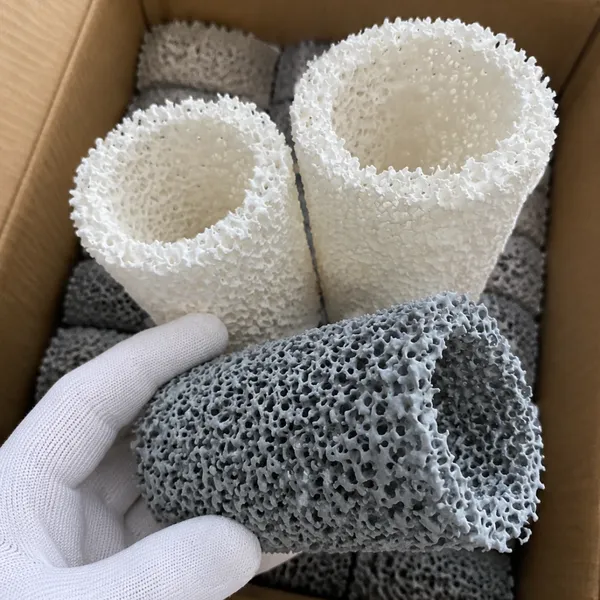
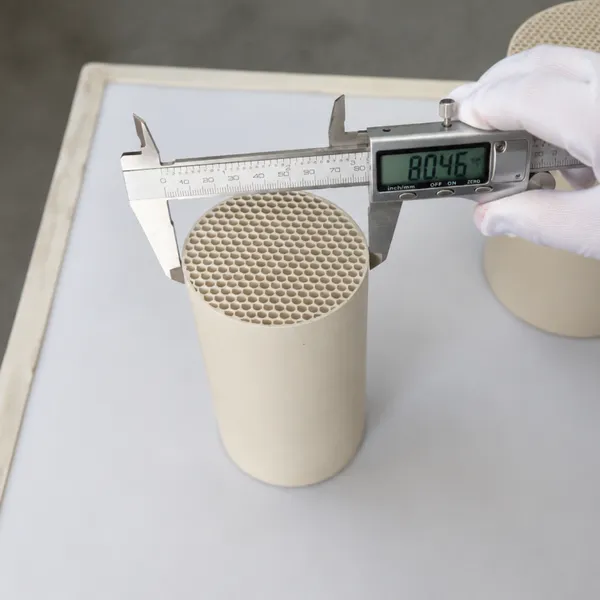
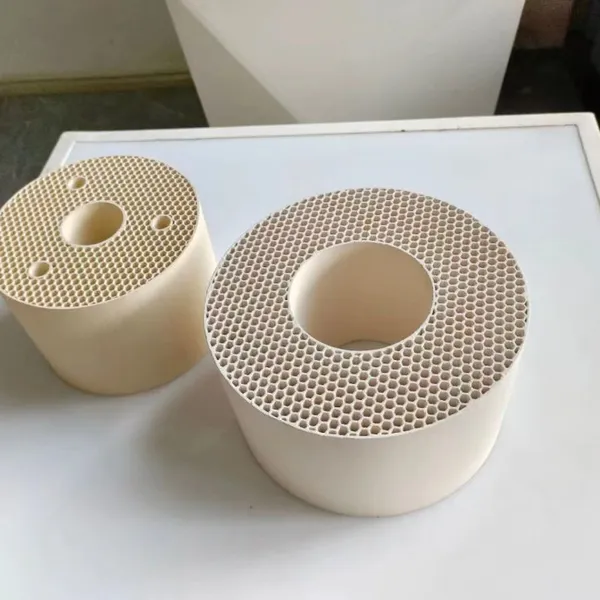
Customized Honeycomb Ceramic Block for RTO and High Temperature ApplicationsNegotiableMOQ: 1 Cubic Meter
-
RTO Honeycomb Ceramic Regenerator Media for Thermal Oxidizer SystemsNegotiableMOQ: 1 Cubic Meter
-
Honeycomb Ceramic Catalyst Support for Catalytic Converter and Chemical ProcessingNegotiableMOQ: 1 Cubic Meter
-
Mullite Honeycomb Ceramic Heat Storage Media for High Temperature ApplicationsNegotiableMOQ: 1 Cubic Meter
-
Cordierite Honeycomb Ceramic Heat Storage Media for RTO and Thermal Regeneration SystemsNegotiableMOQ: 1 Cubic Meter
-
Chevron Mist Eliminator Vane Pack Module for Gas Liquid SeparationNegotiableMOQ: 1 Set
-
Mist Eliminator Support Grid Frame for Demister Pad InstallationNegotiableMOQ: 1 Set
-
High Efficiency Mist Eliminator Fine Droplet Separator for Advanced Gas TreatmentNegotiableMOQ: 1 Set
-
PP Plastic Mist Eliminator Corrosion Resistant Demister for Scrubber TowersNegotiableMOQ: 1 Set
-
Vane Mist Eliminator Blade Type Gas Liquid Separator for Scrubber TowersNegotiableMOQ: 1 Set
-
Wire Mesh Mist Eliminator Mesh Pad Demister for Gas Liquid SeparationNegotiableMOQ: 1 Set
-
PP Packing Support Grid Tower Internals for Corrosive Scrubber and Absorption TowersNegotiableMOQ: 1 Piece